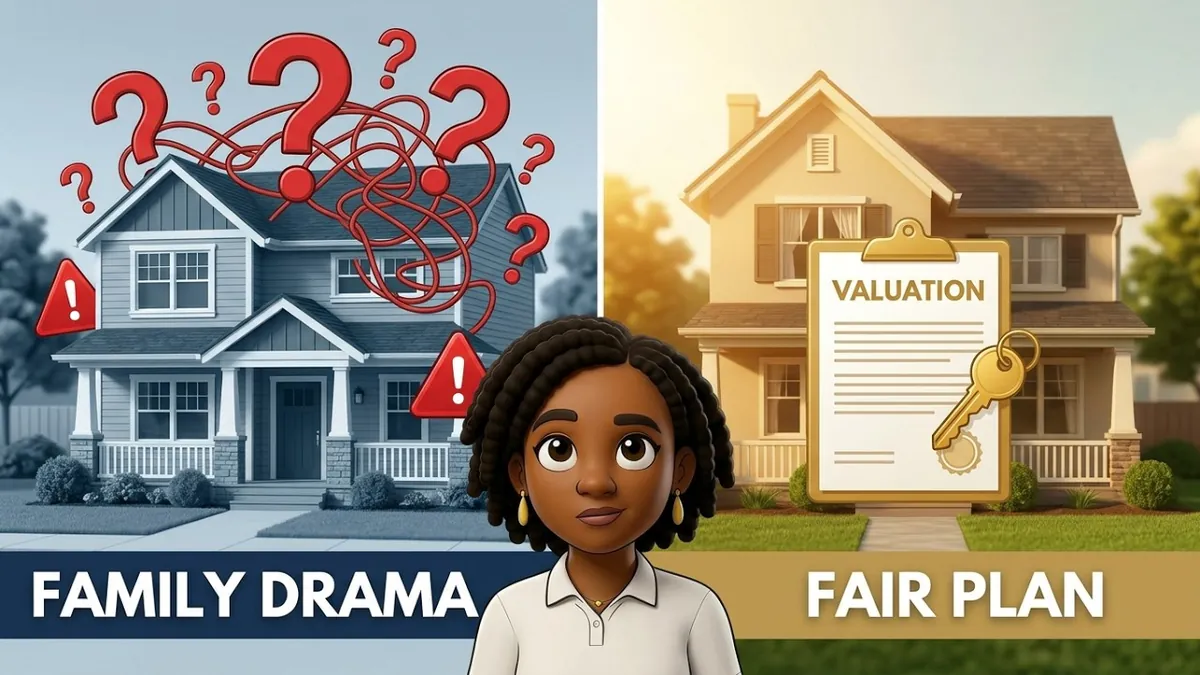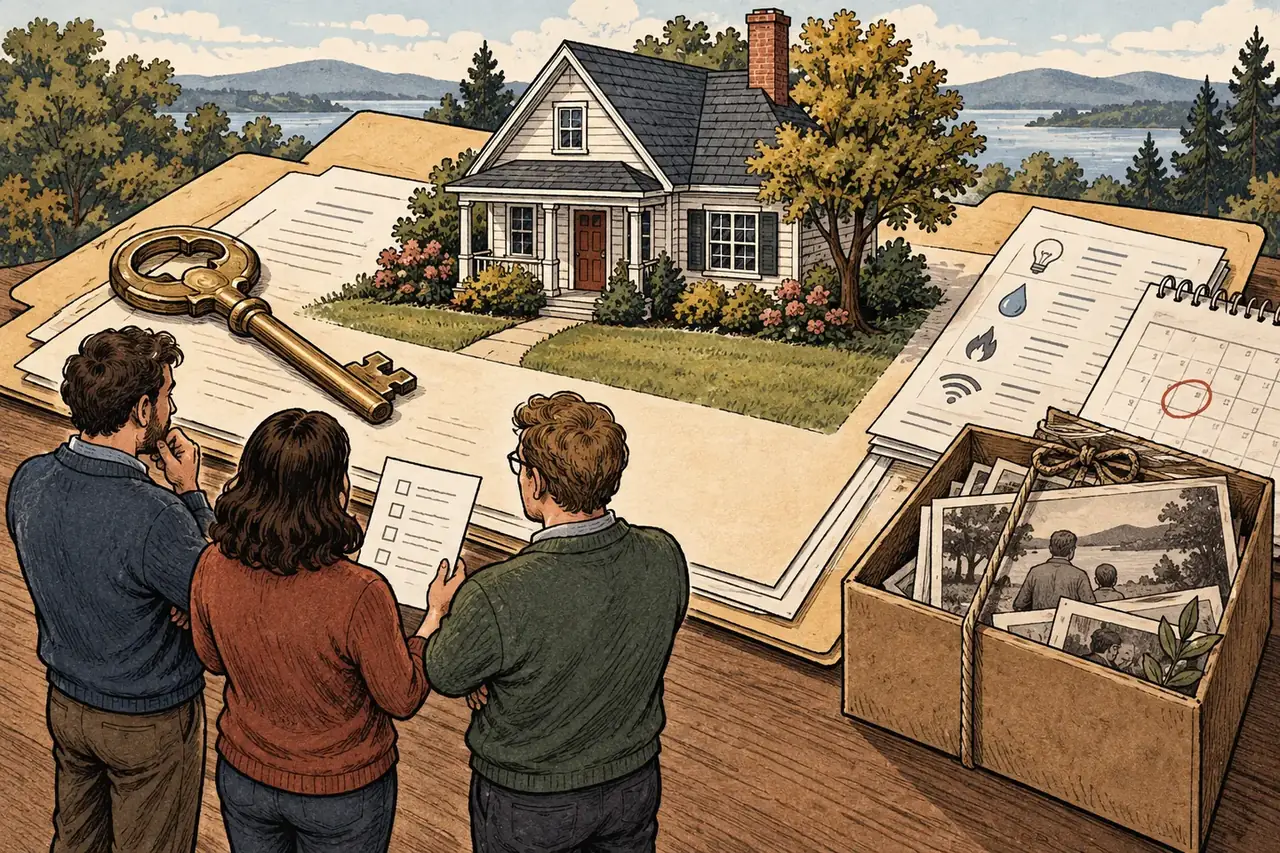
Before anyone talks about selling, there are a handful of things worth knowing. Most of them have nothing to do with the market.
An inherited property arrives with more than a deed. There are belongings, maintenance, taxes, siblings, memories, and a clock nobody set on purpose. People often call us asking what the house is worth. That is a reasonable question, and it is almost never the first one.
The first questions are about what is actually possible. Until those are answered, a valuation is a number without a decision attached to it.
1. Who has authority to make decisions?
This is the question that determines whether anything else can move. Inheriting a property emotionally is not the same as holding the legal ability to sell it, sign for it, or clear it out. Depending on how the property was held and what documents exist, authority may sit with an executor, an administrator, a trustee, or several people at once.
Only a qualified attorney can tell you where authority sits in your specific situation. It is worth establishing early, because acting without it — even with good intentions, even to be helpful — creates problems that are expensive to undo.
2. What does the property cost to hold?
An empty house is not a paused house. While a family decides what to do, the property usually continues to generate obligations. Writing them down in one place is clarifying, because the monthly figure is often the thing that sets a realistic timeline.
- Any mortgage, lien, or home equity line still attached to the property
- Property taxes and any assessments
- Insurance — and whether the current policy still applies to a home that is now unoccupied
- Utilities kept on for heat, humidity control, and access
- Lawn, gutters, and the maintenance that prevents small problems becoming structural ones
3. What condition is it actually in?
Condition drives which paths are open. A property that needs cosmetic work is a different conversation from one with a roof problem, an outdated system, or damage that has been quietly progressing while the house sat empty.
You do not need an inspection to start. You need an honest walk-through and a willingness to write down what you find, including the things that are easier not to look at.
4. What is still inside?
Belongings are usually the slowest part of an inherited property, and the part families most underestimate. A house can be sorted, cleaned out, and ready in weeks — or it can sit for a year because nobody can face the garage.
This is rarely a logistics problem. It is a grief problem wearing a logistics costume. Naming that out loud tends to help more than another weekend of good intentions.
5. Who else is part of this decision?
If more than one person has a claim, an opinion, or a memory attached to the house, the property question is rarely the hardest part. Getting several people to one decision is.
It helps enormously to separate the two conversations. First, what are the realistic options and what does each one require? Second, which one do we choose? Families that merge those two conversations tend to argue about the choice before anyone agrees on what the choices are.
Then, and only then, the market question
Once you know who decides, what it costs to hold, what condition it is in, what is inside, and who is involved, a valuation becomes useful — because now it sits next to a timeline and a set of constraints, and you can compare paths honestly instead of reacting to a single number.
You do not have to know the answer before you call. Determining the right path is the work, not the prerequisite.