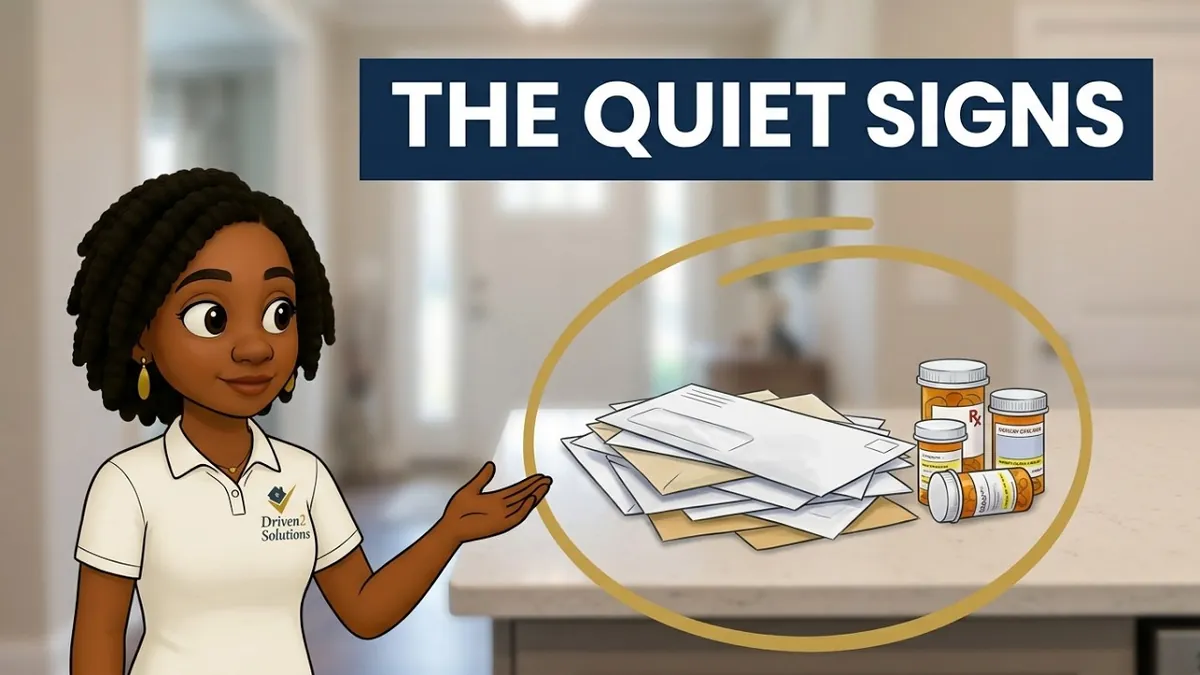
Unopened mail, expired food, missed medications, clutter, mobility changes. The quiet signs that a parent may need more help, and how to start the conversation.
After a visit home, many adult children leave with a feeling they cannot quite name. Nothing dramatic happened, but something was different. In this video, Kristin with Driven2 Solutions walks through the quiet signs that a parent may need more support, and how to begin the conversation.
The quiet signs
- Unopened mail and bills piling up.
- Expired food in the refrigerator or pantry.
- Missed or doubled medications.
- Clutter in rooms that used to be kept tidy.
- Changes in how they move: holding onto furniture, avoiding the stairs.
One of these on its own may mean nothing. Several together, or a change since your last visit, is worth paying attention to.
Starting the conversation
Lead with what you noticed and ask how things feel to them, rather than opening with a solution. A parent who hears “we think you should move” often hears “you can no longer manage.” A parent who is asked what would make the house easier is more likely to talk.
Where the house fits in
More support does not always mean moving. It can mean help at home, a smaller home, or a senior living community. When a move is on the table, the house often becomes part of the plan, sometimes as a way to help fund care. We help families compare listing the home, selling it as-is, renting it, or keeping it, and we can coordinate the belongings and the move around your parent’s timeline.
For help with the conversation itself, read how to start the conversation about leaving a longtime home on our blog.