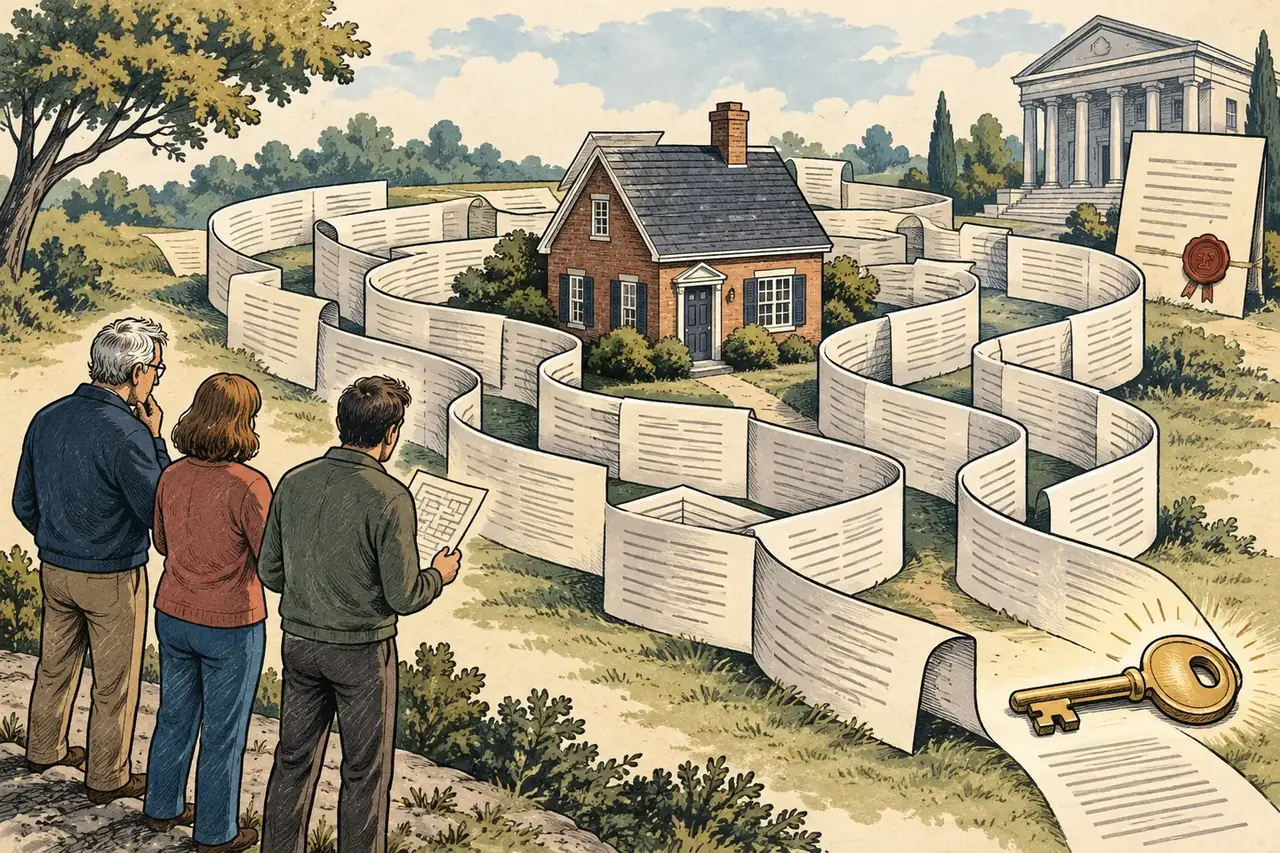
The order of operations for selling an estate home: confirming authority, preparing and pricing the property, marketing it, and what has to happen before closing.
Selling a house in probate involves legal steps, paperwork, and emotional decisions all at once. This video walks through the process in order, so executors and families know what to expect and how to avoid common mistakes.
The steps, in order
- Open the estate: the executor or administrator qualifies through the circuit court clerk, usually with an attorney.
- Confirm authority: the estate’s attorney confirms who can sign a listing agreement or a purchase contract.
- Secure the house: lock it, keep it insured, and keep up with utilities and maintenance while the estate is open.
- Decide on condition and contents: clear it out and make repairs, or sell it as-is with belongings handled as part of the plan.
- Price it: a valuation based on the home’s actual condition and comparable sales.
- Market it or take a direct offer: list it on the open market, or compare a direct cash offer.
- Close: the executor signs with the attorney’s guidance, and proceeds go to the estate.
Court confirmation
Some states require a court to confirm a probate sale. Whether any court step applies to a Virginia estate depends on the will and the circumstances, and the estate’s attorney is the right person to confirm whether anything beyond the executor’s signature is needed.
We help estates with cleanouts, valuations, preparing the house, direct cash offers, and coordinating with attorneys. For the basics of how probate works, see our Probate Real Estate 101 article.