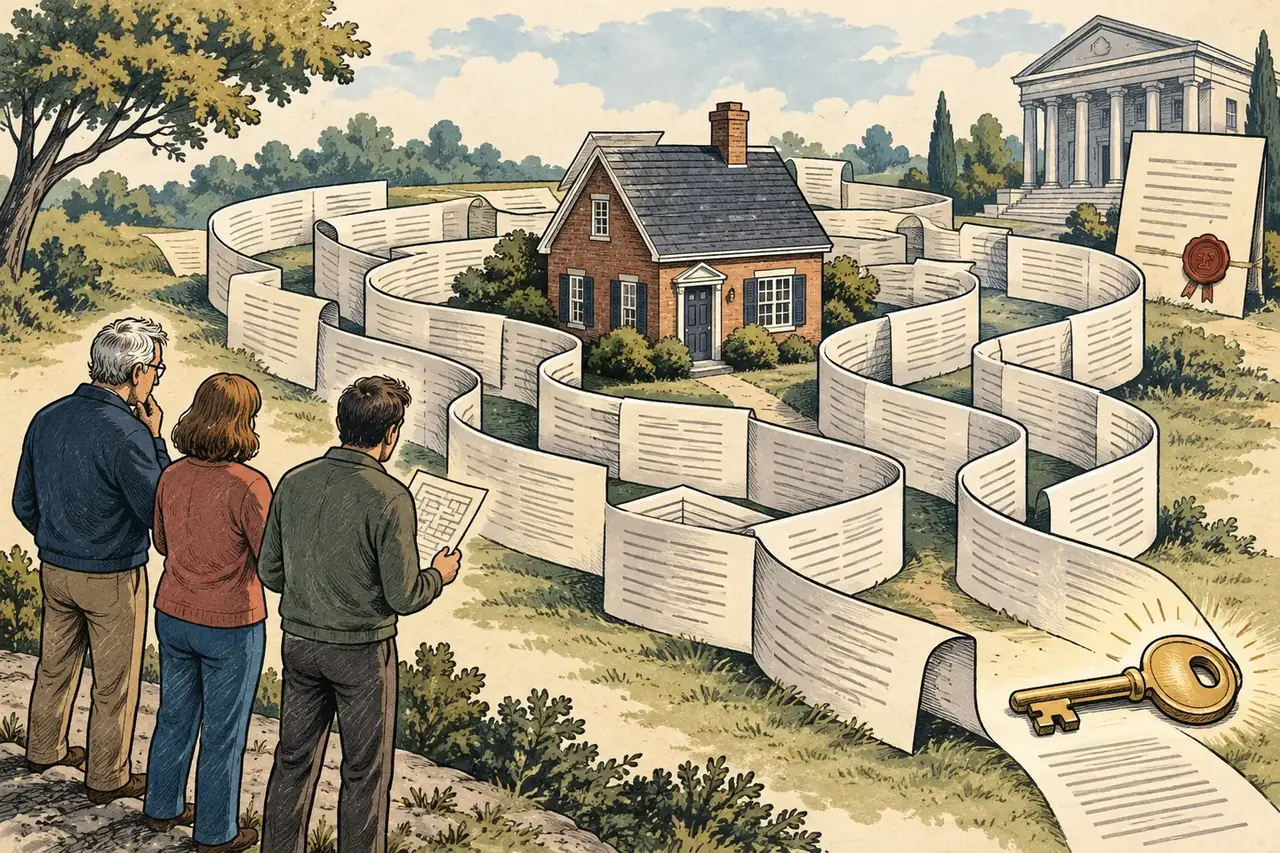
Probate is an administrative process, not a punishment. Here is the plain-language version of how a property fits into it.
Probate is one of those words that sounds worse than it is. It is the process of settling someone's affairs after they die — identifying what they owned, paying what they owed, and passing the rest to the people entitled to it. A house is simply one asset inside that process.
The role that matters most
Someone has to be responsible for the estate. Depending on the situation and the documents involved, that person may be called an executor, an administrator, or a personal representative. The titles differ; the practical burden is similar.
That person generally carries a duty to preserve estate property — to act in the interest of the estate and its beneficiaries rather than their own. For a house, that duty has very physical consequences.
Why an empty house is an active responsibility
People often assume the house can wait until the paperwork is finished. In practice, a property left genuinely alone tends to get worse, and the person responsible for the estate is the one who has to answer for it.
- Insurance may need to be reviewed or changed once the home is unoccupied
- Heat and humidity control prevent damage that is far more expensive than the utility bill
- Mail, lawn, and visible neglect signal vacancy to the wrong people
- Taxes, dues, and any mortgage generally continue regardless of the estate's status
- Deferred maintenance compounds — a small leak becomes a structural repair
Where a property holds up an estate
Estates get stuck on houses more often than on anything else. A few recurring reasons:
The house is full
Nothing can be listed, transferred, or handed over until the contents are dealt with, and contents are emotionally slow. This is the single most common cause of a stalled estate we see.
Beneficiaries disagree
One person wants to keep it, one wants it sold immediately, one lives out of state and cannot get there. The property becomes the place the family disagreement lives.
Condition makes the path unclear
Nobody wants to invest estate funds in repairs without knowing whether the repairs will be recovered, so the decision gets postponed — while holding costs continue.
Nobody is sure what they are allowed to do
This one is solvable quickly and is worth solving first. An attorney can confirm what the responsible party may and may not do, which usually unlocks several other decisions at once.
What we actually do here
We handle the property side and work alongside the attorney handling the estate. That means condition reviews, cleanout and donation coordination, comparing realistic paths for the house, and keeping the moving pieces moving — so the property stops being the thing holding everything else up.
We do not advise on probate requirements, authority, or deadlines. That is the attorney's work, and we are glad it is.
Executors and personal representatives carry real responsibility, often while grieving. Taking the property side off their plate is usually the most useful thing anyone can do.